Very Low Earth Orbit (VLEO),
the Closest Space to Earth

Constellation Satellites and the NewSpace Era
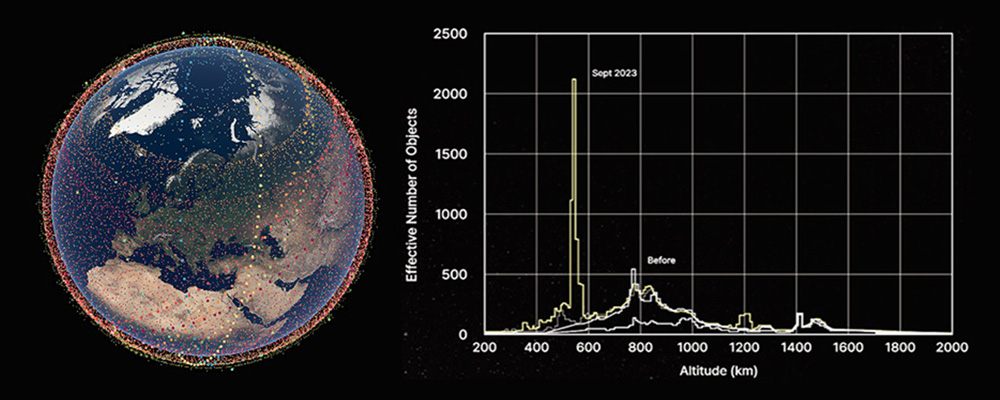
Starlink is a space-based communication service in which more than 7,000 constellation satellites operate in an orbit approximately 550km above the ground. Although the concept of satellite constellations has been studied extensively in the past, until very recently it remained a fictional idea addressed only at the conceptual level because the high launch cost required to operate a large number of constellation satellites rendered it infeasible.
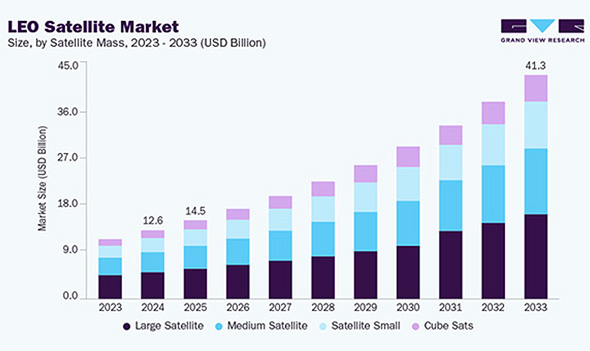
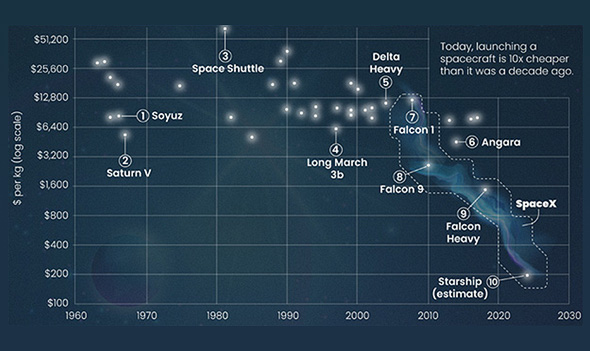
With SpaceX's development of highly efficient, low-cost reusable launch vehicles, satellite launch costs have been reduced from tens of millions of won per kilogram to only a few million won—representing an order-of-magnitude reduction—and this has indeed opened the NewSpace era. The resulting economic and geopolitical impacts are substantial. The space industry had previously been a field in which corporate profitability was extremely difficult due to high launch costs and, at the same time, the opportunity cost of failure was enormous. Consequently, it had mainly been used for military purposes or for limited applications such as GPS and satellite imagery. However, Starlink, the first to succeed in deploying a constellation system, now serves more than five million subscribers in over 120 countries and is reported to generate more than one billion dollars in annual operating profit. Although companies such as OneWeb and Kuiper have emerged as latecomers in the satellite communications market, Starlink satellites currently occupy about 70% of low Earth orbit, and it is not an exaggeration to say that this orbital region has essentially been captured. Furthermore, concerns and the likelihood of radio-frequency interference and collisions between satellites in space are increasing, and such issues may reduce overall operational efficiency of the orbit.
dvantages of Very Low Earth Orbit (VLEO)
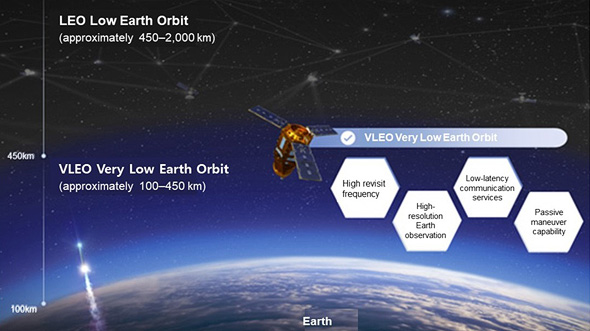
In November 2024, the U.S. Federal Communications Commission granted conditional approval for second-generation Starlink satellites to provide direct-to-smartphone service from very low Earth orbit at an altitude of approximately 350km. Many satellites to be launched in the future are highly likely to be placed in VLEO, very close to Earth (100-450km). VLEO satellites have several advantages: because the operational altitude is low, launch costs are reduced; the proximity to Earth enables low-latency communication; and high-resolution observation using optical instruments becomes possible. In addition, due to the presence of rarefied atmosphere, orbital debris can easily de-orbit and fall to Earth, making it a relatively safe orbit and eliminating the need to consider end-of-life disposal strategies such as satellite retrieval. As the closest region of space, VLEO may be used in diverse fields, including microgravity-based multidisciplinary space research. The Korea Aerospace Administration also recognizes the urgency and importance of VLEO satellite development and has designated VLEO technology development and test-satellite launches as major milestones in its satellite propulsion strategy roadmap.
Three Key Technologies for VLEO Satellite Operation: High-Efficiency Propulsion, Rarefied-Gas Aerodynamic Design, and Atomic Oxygen-Resistant Materials
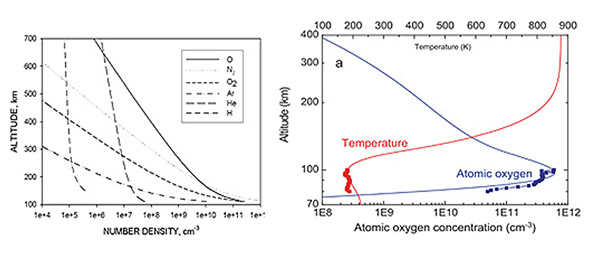
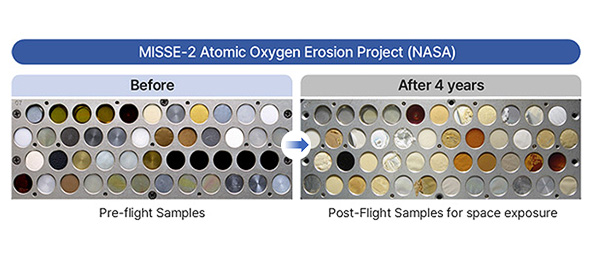
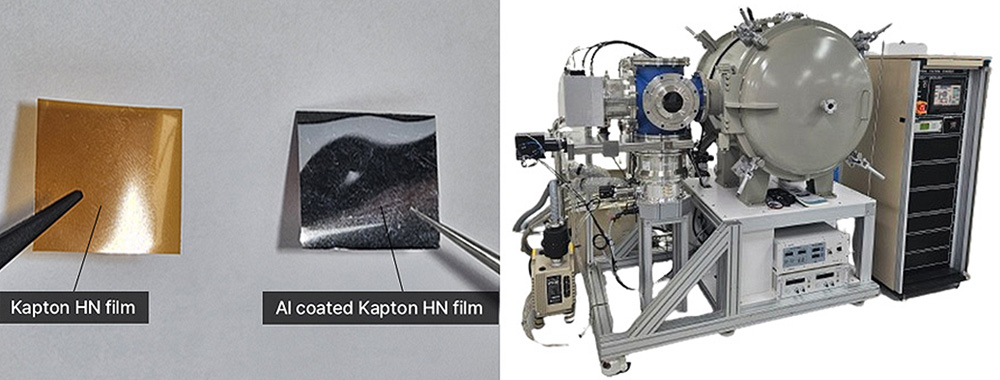
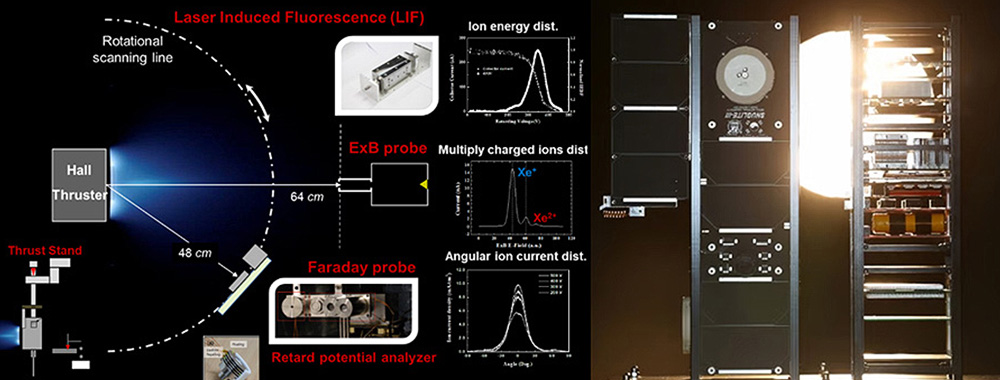
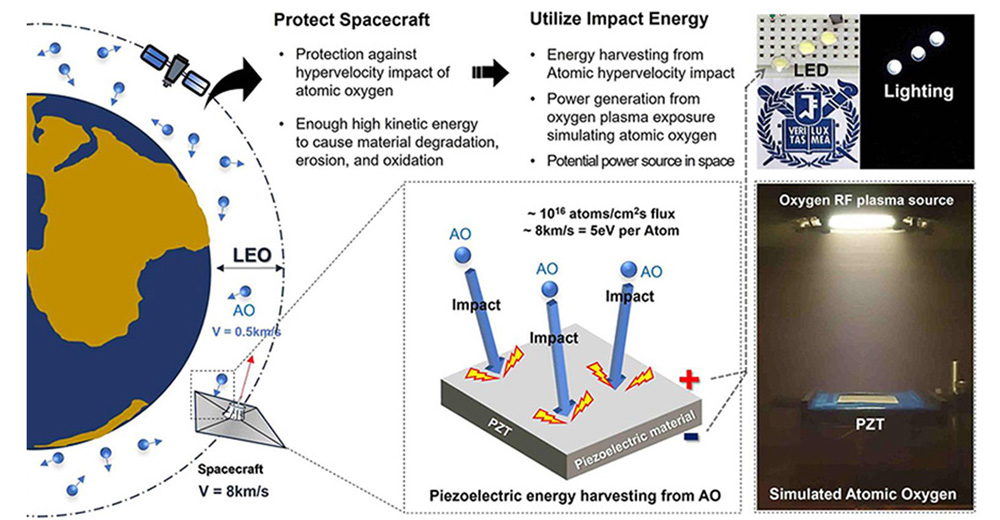
VLEO, unlike other orbital regimes, contains extremely low-density gases (on the order of 10⁻⁹ to 10⁻¹² atmospheric density), with atomic oxygen (O) being the most prevalent species. Oxygen molecules (O₂), which exist in the lower atmosphere, are dissociated by solar radiation and exist in atomic form, striking satellite surfaces and causing material degradation. The impact velocity reaches approximately 8km/s, required for maintaining orbital altitude, which represents an extreme environment unimaginable under typical terrestrial conditions. Rarefied atomic oxygen gases reduce the orbital velocity of satellites and cause rapid orbital decay. To compensate for this, propulsion systems capable of generating millinewton-level thrust are required continuously during operation. Because such systems steadily consume fuel, highly efficient Hall thrusters or atmospheric-breathing thrusters must be developed. Additionally, rarefied-gas aerodynamic design is needed to minimize drag. Consequently, the external shapes of VLEO satellites currently under development mostly resemble aerodynamically favorable aircraft-like geometries. Furthermore, developing materials that are resistant to damage from atomic oxygen collisions and can maintain performance is critically important for ensuring satellite operational lifespan and capability. The Extreme Environment and Impact Research Laboratory at Seoul National University is developing hypervelocity atomic oxygen impact-resistant coating materials for VLEO and is pursuing a patent for a harvesting method that recovers energy generated during hypervelocity impacts.
Conclusion
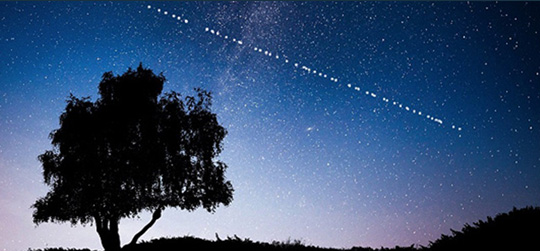
On clear days, many Starlink satellites can be observed passing across the sky with the naked eye. Although the NewSpace era has begun, core technologies for operating numerous satellites in the newly emerging VLEO region are still under development, and many companies and institutions will seek to secure this orbit by developing VLEO satellites in the future. It is hoped that Korea will rapidly secure the core technologies necessary for VLEO satellite development and establish itself as a key player in the NewSpace era.
Image Source
- Figure 1. (Left) European Southern Observatory (Right) Liou, J. C., and Tom Colvin. "US Space Debris Environment and Activity Updates." 60th Session of the Scientific and Technical Subcommittee / Committee on the Peaceful Uses of Outer Space, United Nations, 2023.
- Figure 2. Grand View Research, LEO Satellite Market Size, Share & Trend Analysis Report By Satellite Mass (Small Satellite, CubeSats, Medium Satellite, Large Satellite), By Frequency Band, By Propulsion Type, By Application, By End Use, By Region, And Segment Forecasts, 2025-2033. (https://www.grandviewresearch.com/industry-analysis/leo-satellite-market-report)
- Figure 3. The Cost of Space Flight Before and After SpaceX, Visual Capitalist (https://www.visualcapitalist.com/the-cost-of-space-flight/)
- Figure 4. "Korea Aerospace Administration — Development of Atomic Oxygen-Resistant Materials and Testing Techniques Required for VLEO Satellite Operations." (Original title in Korean: "초저궤도(VLEO) 위성 운용에 필요한 원자산소 저항성 재료 및 시험 기법 개발" 우주항공청)
- Figure 7. (Left) "Future Composite Materials Sustainable Platform Support Project", Kolon Spaceworks (Right) "Development of Atomic Oxygen-Resistant Materials and Testing Techniques Required for VLEO Satellite Operations", Korea Aerospace Administration
- Figure 8. (Left) https://sppl.pusan.ac.kr/sppl/71476/subview.do (Right) Aerotec 2026, Aerospace Trends, "Seoul National University's World-First Technology 'Low-Cost, High-Efficiency Satellite SNUGLITE-III' Deployed in Space" (https://www.aerotec.or.kr/bbs/board.php?bo_table=trends&wr_id=41)
- Figure 9. Seo, Jae Hyeon, et al. "Piezoelectric Energy Harvesting from the Atomic Oxygen Hypervelocity Impact in Low Earth Orbit." Acta Astronautica 223 (2024): 585-593.
- Figure 10. Vito Technology, Inc.